APERTURE
Editor's Note
SHARED LIVES: THE COMMUNAL SPIRIT TODAY
In North America, there has been a resurgence of "intentional communities," from small cooperatives on university campuses to large rural farming communities. When Aperture realized that a number of photographers were focusing on this subject, we also found that the question, what is communal, offered a wide range of interpretations. In this issue, we present six communities where people have chosen to share the labor and rewards of group living. The reasons for making this choice vary considerably, but there is a common theme among them. In each instance, people are committed to satisfying the needs of the group before those of the individual, with the belief that the individual becomes stronger in the process.
Alternative-lifestyle communes that sprang up during the 1960s have given the counter-culture movement—and communes—an indelible place in the social and visual history of North America. What quickly became clear, however, is that communal living claims a long history here.
For the first settlers arriving from Europe, it was a way of life rooted in the passionate commitment to building communities free from social and religious persecution. By combining their resources (which were often meager) settlers stood a better chance of surviving in the wilderness and cultivating the land.
Utopian experiments such as Amana and the Shaker communities flourished during the nineteenth century; many of these groups were formed in response to the misery of life in overcrowded industrial towns. Called “communistic societies,” they offered poor people an alternative to slaving for factory owners who viewed their workers as an endless pool of cheap labor. It was a risky choice to make; there were no guarantees that any group could serve the economic needs of each individual and family. But the Utopian movement swept tens of thousands into new settlements across the continent, and many of these communities flourished for generations because they did offer the rewards promised. Although the original Utopian communities have all but disappeared, the concept of a society free of poverty and suffering continues to inspire many who strive for the personal and spiritual harmony that group living can afford.
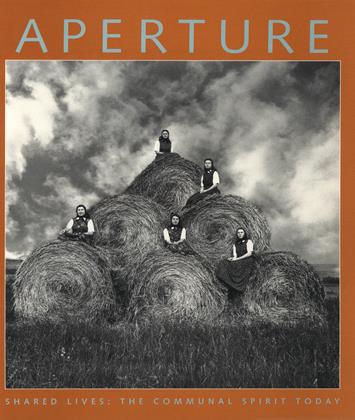
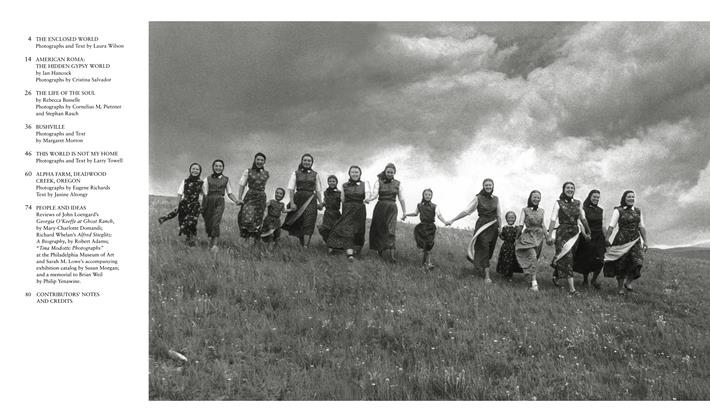
We open this issue with Laura Wilson’s compelling photo essay on the Hutterite communes of Montana. This is truly a world apart, where social and religious traditions formed in the sixteenth century still hold sway—alongside the latest innovations in mechanized agriculture. As Wilson shows in her text, the communal way of life is difficult but rewarding, and provides a wholesome rhythm of labor, relaxation, and worship.
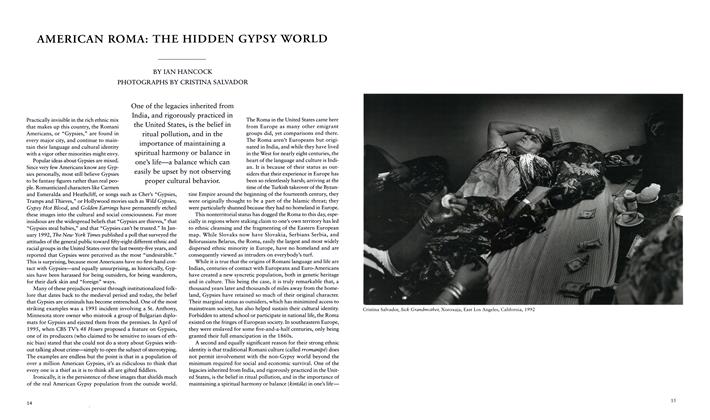
Cristina Salvador’s stirring visual narrative reveals the hidden domain of California Gypsies. Continuously persecuted since they dispersed from India one thousand years ago, the Roma’s vigorously guarded ethnic heritage provides a vital sense of community for people who remain geographically scattered in order to survive. Salvador’s images offer a memorable view of a society where non-Gypsies are rarely welcomed.
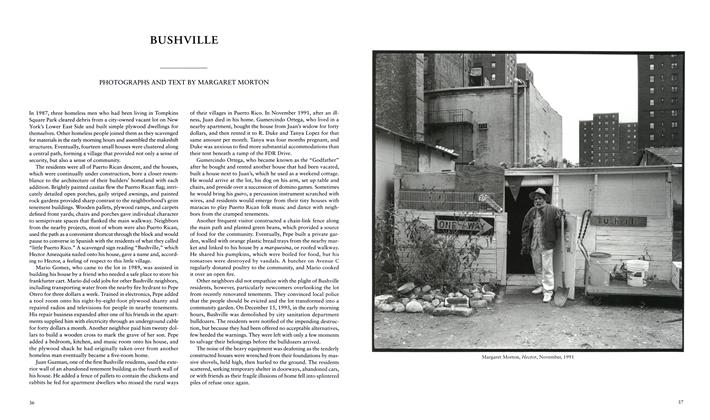
In New York City, Margaret Morton encountered a tiny village built by homeless Puerto Ricans on the Lower East Side. Her photographs chronicle the evolution of “Bushville” from a series of ramshackle cabins to what became a place of pride. The oral histories she recorded convey the hopes and despairs of homeless individuals who had found a place—until their hamlet was demolished on orders from Mayor David Dinkins.
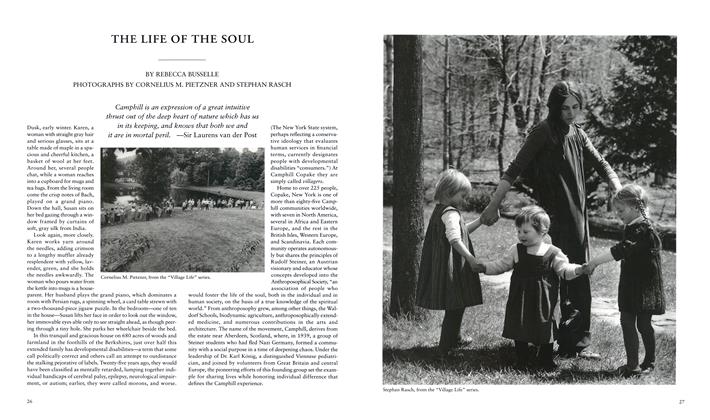
Camphill Villages provide an alternative to the bleakness of institutional care for people with developmental disabilities. Camphill mutually engages the disabled and the able in a secure life where the healing process is intertwined with a communal way of life. The images here were taken by two accomplished photographers who live among and care for “villagers.”
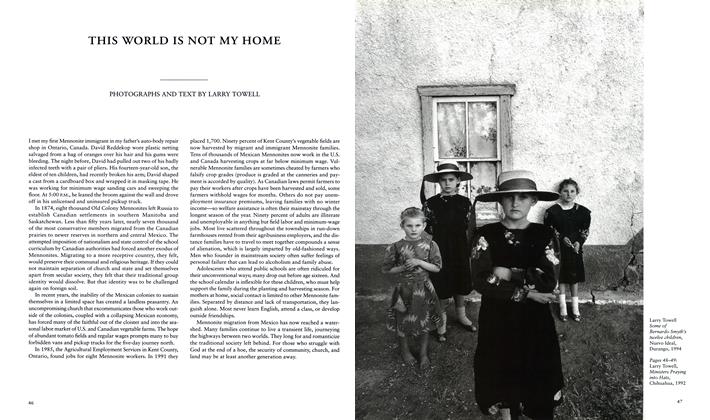
For the Old Colony Mennonites of Mexico, strongly-held religious beliefs have proved to be a double-edged sword. While tradition binds these farming communities together, their rejection of modern ideas has left them poverty-stricken and landless. Larry To well’s luminous photographs and narrative express the joys and sorrows of these migrant farmers who eke out a living with God at the end of a hoe.”
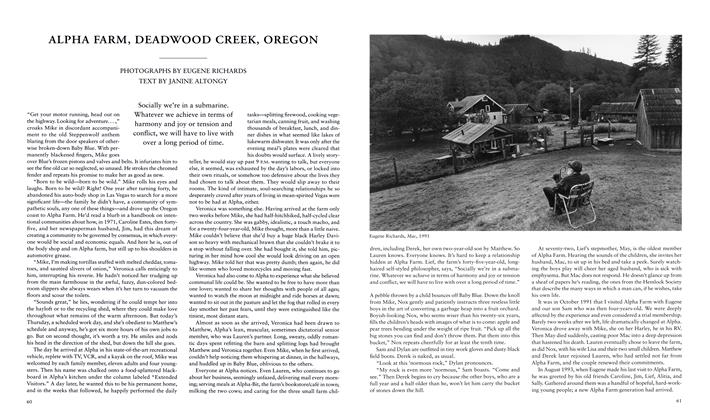
The issue concludes with Eugene Richards’s intimate photo essay on Alpha Farm, where sixties-style idealism sustains a small Oregon commune founded twenty-five years ago. For one man, Alpha promised “a more significant life, the family he didn’t have, a community of like-minded people ... in which everyone would be social and economic equals.”
Today, a broad spectrum of group living colors the domestic landscape—from religious sects in rural compounds to cosmonauts aboard Russia’s space station, Mir. Here, we take an opportunity to observe people who invoke the traditional communal spirit—and create an experience that can be more rewarding than that offered by single-family life. In the process, they build a strong sense of community that often helps them overcome serious difficulties. We are indebted to the contributors who gave life to this publication, and to the individuals who welcomed these photographers into their circles.
THE EDITORS