Editor's Note
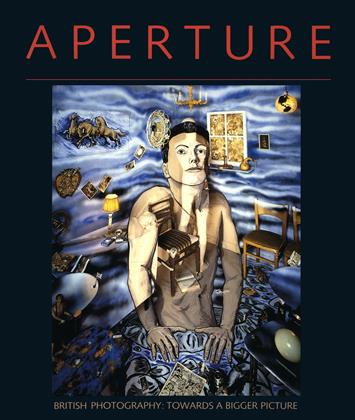
British Photography: Towards A Bigger Picture
British Photography: Towards a Bigger Picture
Editor's Note
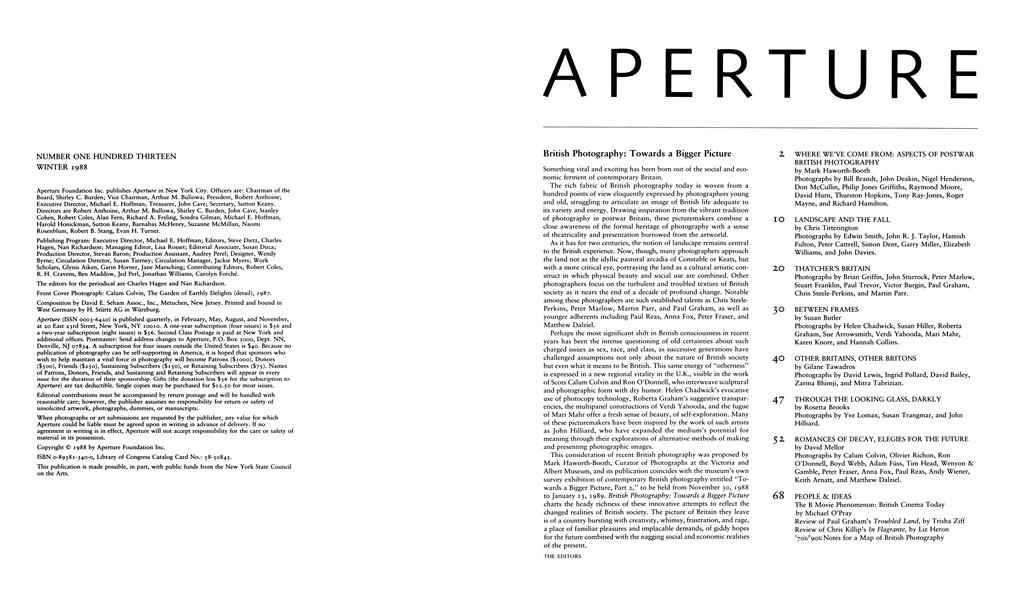
Something vital and exciting has been born out of the social and economic ferment of contemporary Britain.
The rich fabric of British photography today is woven from a hundred points of view eloquently expressed by photographers young and old, struggling to articulate an image of British life adequate to its variety and energy. Drawing inspiration from the vibrant tradition of photography in postwar Britain, these picturemakers combine a close awareness of the formal heritage of photography with a sense of theatricality and presentation borrowed from the artworld.
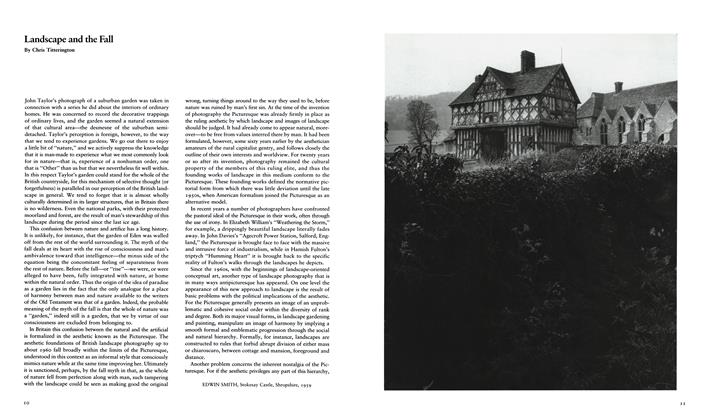
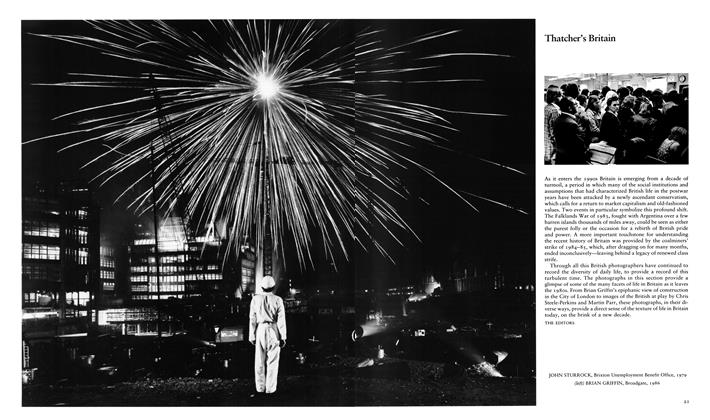
As it has for two centuries, the notion of landscape remains central to the British experience. Now, though, many photographers approach the land not as the idyllic pastoral arcadia of Constable or Keats, but with a more critical eye, portraying the land as a cultural artistic construct in which physical beauty and social use are combined. Other photographers focus on the turbulent and troubled texture of British society as it nears the end of a decade of profound change. Notable among these photographers are such established talents as Chris SteelePerkins, Peter Marlow, Martin Parr, and Paul Graham, as well as younger adherents including Paul Reas, Anna Fox, Peter Fraser, and Matthew Dalziel.
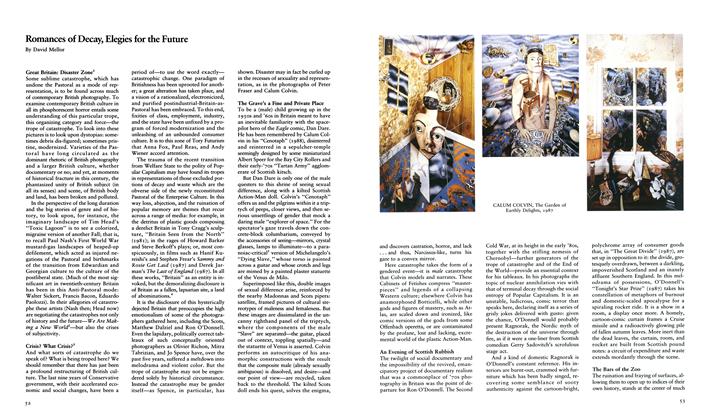
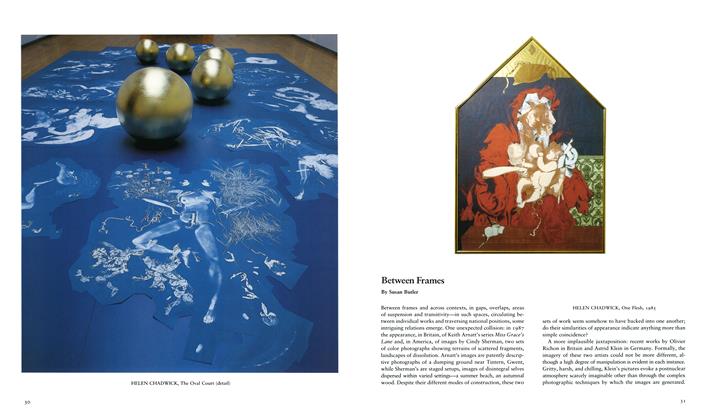
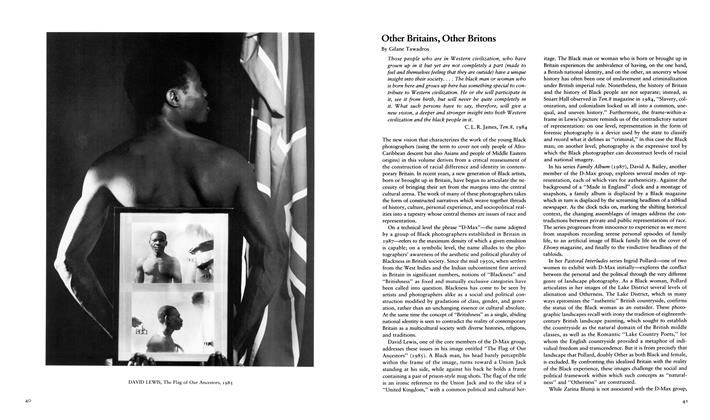
Perhaps the most significant shift in British consciousness in recent years has been the intense questioning of old certainties about such charged issues as sex, race, and class, as successive generations have challenged assumptions not only about the nature of British society but even what it means to be British. This same energy of “otherness” is expressed in a new regional vitality in the U.K., visible in the work of Scots Calum Colvin and Ron O’Donnell, who interweave sculptural and photographic form with dry humor. Helen Chadwick’s evocative use of photocopy technology, Roberta Graham’s suggestive transparencies, the multipanel constructions of Verdi Yahooda, and the fugue of Mari Mahr offer a fresh sense of beauty, of self-exploration. Many of these picturemakers have been inspired by the work of such artists as John Hilliard, who have expanded the medium’s potential for meaning through their explorations of alternative methods of making and presenting photographic images.
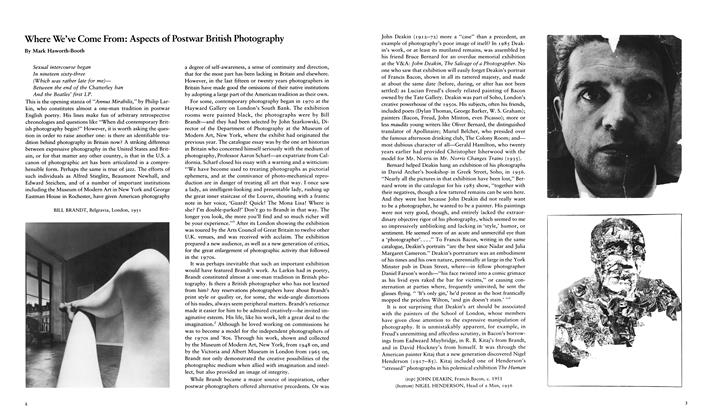
This consideration of recent British photography was proposed by Mark Haworth-Booth, Curator of Photographs at the Victoria and Albert Museum, and its publication coincides with the museum’s own survey exhibition of contemporary British photography entitled “Towards a Bigger Picture, Part 2,” to be held from November 30, 1988 to January 15, 1989. British Photography: Towards a Bigger Picture charts the heady richness of these innovative attempts to reflect the changed realities of British society. The picture of Britain they leave is of a country bursting with creativity, whimsy, frustration, and rage, a place of familiar pleasures and implacable demands, of giddy hopes for the future combined with the nagging social and economic realities of the present.
THE EDITORS