The Anxiety Of Images
Anne Nivat And Pieranna Cavalchini
ANNE NIVAT AND PIERANNA CAVALCHINI
French journalist Anne Nivat has written to me on a regular basis about her travels and work in Russia, Chechnya, Iraq, and Afghanistan since 2004, when she was an Artist-in-Residence at the Isabella Stewart Gardner Museum at my invitation. Fier first email that included photographs was from Chechnya. Nivat talks about the images she has in her head of the Chechen war— a war, she believes, that almost never existed for the American public, because CNN was not there to film it. ‘‘No CNN, no war," she often says.
Earlier this year, Nivat emailed me about recent experiences as a journalist embedded with a battalion of Canadian paratroopers in Afghanistan. Nivat says she takes photographs because today we have reached such a level of the ‘‘virtual" in our understanding/ misunderstanding of these wars (Afghanistan, Iraq, etc.) that photography helps prove what we say with words, proves that we were there.
What follows are some excerpts from Nivat’s emails. Pieranna Cavalchini
1/3/11 Dear Pieranna:
We are the end of 2010. This is the hour that all the world puts sadness to bed and celebrates the New Year. It seems a good time for me to share, as a photo story—a rather special format—what I have been living through in my favorite lands of Afghanistan.
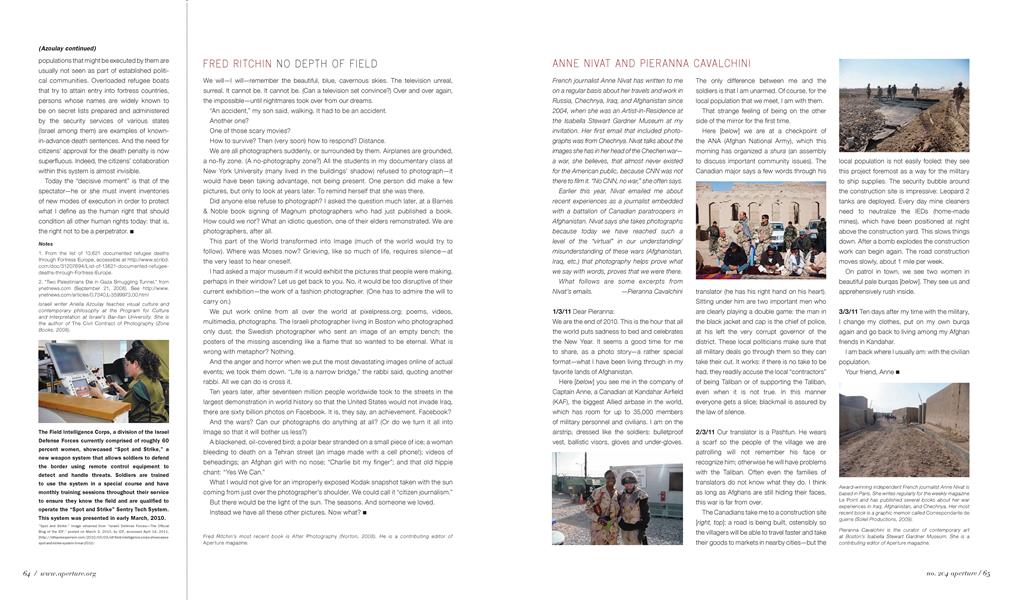
Here [below] you see me in the company of Captain Anne, a Canadian at Kandahar Airfield (KAF), the biggest Allied airbase in the world, which has room for up to 35,000 members of military personnel and civilians. I am on the airstrip, dressed like the soldiers: bulletproof vest, ballistic visors, gloves and under-gloves. The only difference between me and the soldiers is that I am unarmed. Of course, for the local population that we meet, I am with them.
That strange feeling of being on the other side of the mirror for the first time.
Here [below] we are at a checkpoint of the ANA (Afghan National Army), which this morning has organized a shura (an assembly to discuss important community issues). The Canadian major says a few words through his translator (he has his right hand on his heart). Sitting under him are two important men who are clearly playing a double game: the man in the black jacket and cap is the chief of police, at his left the very corrupt governor of the district. These local politicians make sure that all military deals go through them so they can take their cut. It works: if there is no take to be had, they readily accuse the local “contractors” of being Taliban or of supporting the Taliban, even when it is not true. In this manner everyone gets a slice; blackmail is assured by the law of silence.
2/3/11 Our translator is a Pashtun. He wears a scarf so the people of the village we are patrolling will not remember his face or recognize him; otherwise he will have problems with the Taliban. Often even the families of translators do not know what they do. I think as long as Afghans are still hiding their faces, this war is far from over.
The Canadians take me to a construction site [right, top]\ a road is being built, ostensibly so the villagers will be able to travel faster and take their goods to markets in nearby cities—but the local population is not easily fooled: they see this project foremost as a way for the military to ship supplies. The security bubble around the construction site is impressive: Leopard 2 tanks are deployed. Every day mine cleaners need to neutralize the lEDs (home-made mines), which have been positioned at night above the construction yard. This slows things down. After a bomb explodes the construction work can begin again. The road construction moves slowly, about 1 mile per week.
On patrol in town, we see two women in beautiful pale burqas [below]. They see us and apprehensively rush inside.
3/3/11 Ten days after my time with the military,
I change my clothes, put on my own burqa again and go back to living among my Afghan friends in Kandahar.
I am back where I usually am: with the civilian population.
Your friend, Anne ■
Award-winning independent French journalist Anne Nivat is based in Paris. She writes regularly for the weekly magazine Le Point and has published several books about her war experiences in Iraq, Afghanistan, and Chechnya. Her most recent book is a graphic memoir called Correspondante de guerre (Soleil Productions, 2009).
Pieranna Cavalchini is the curator of contemporary art at Boston’s Isabella Stewart Gardner Museum. She is a contributing editor of Aperture magazine.
More From This Issue
-
 Dialogue
Talking Pictures
Fall 2011 -
 Essay
Essay"This Is The Photo League"
Fall 2011 -
 Work And Process
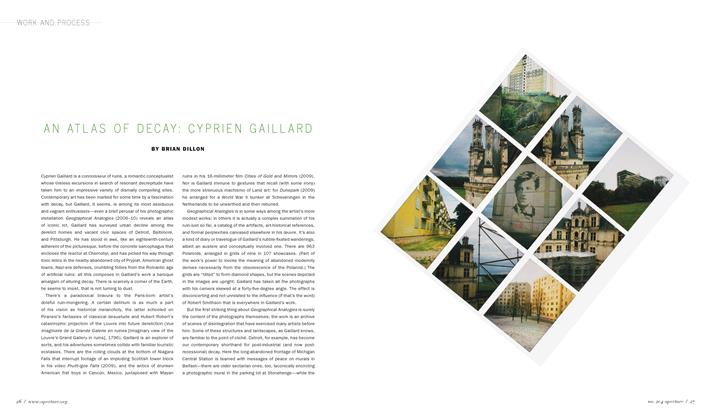
An Atlas Of Decay: Cyprien Gaillard
Fall 2011 -
 On Location
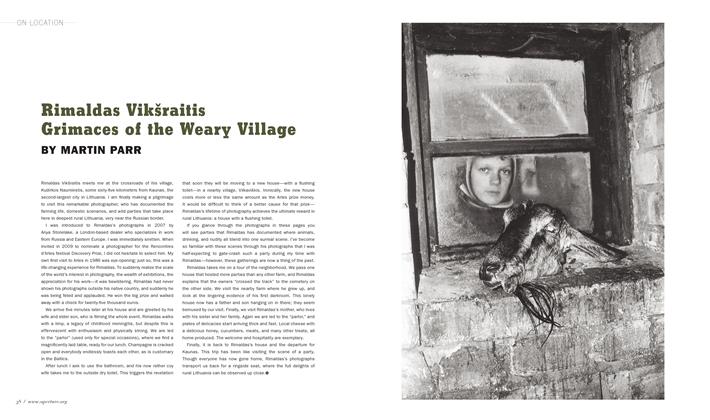
Rimaldas Vikšraitis: Grimaces Of The Weary Village
Fall 2011 -
 Portfolio
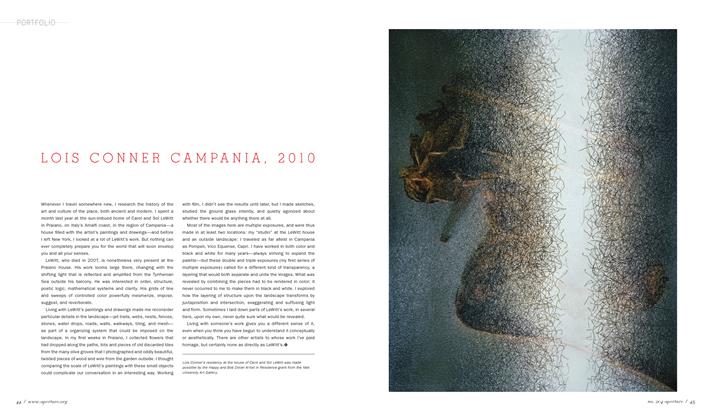
Lois Conner: Campania, 2010
Fall 2011 -
 The Anxiety Of Images
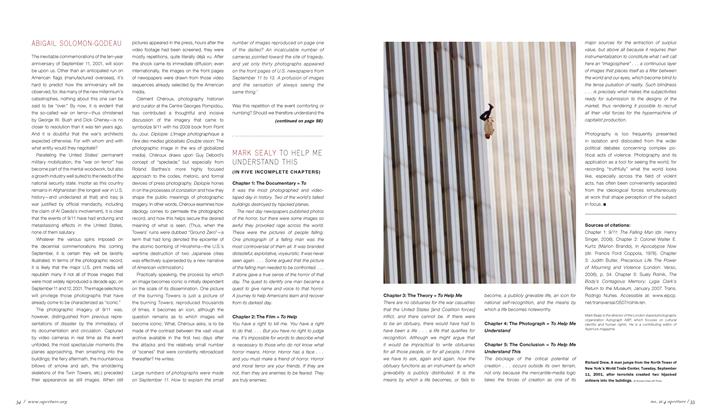
Abigail Solomon-Godeau
Fall 2011
The Anxiety Of Images
-
 The Anxiety Of Images
Adam Broomberg & Oliver Chanarin
Fall 2011 -
 The Anxiety Of Images
Ariella Azoulay: The Architecture Of Execution
Fall 2011 -
The Anxiety Of Images
David Cole
Fall 2011 -
The Anxiety Of Images
Deborah Willis
Fall 2011 -
The Anxiety Of Images
Enrico Bossan
Fall 2011 -
 The Anxiety Of Images
Geoff Dyer
Fall 2011
