The Anxiety Of Images
David Cole
DAVID COLE
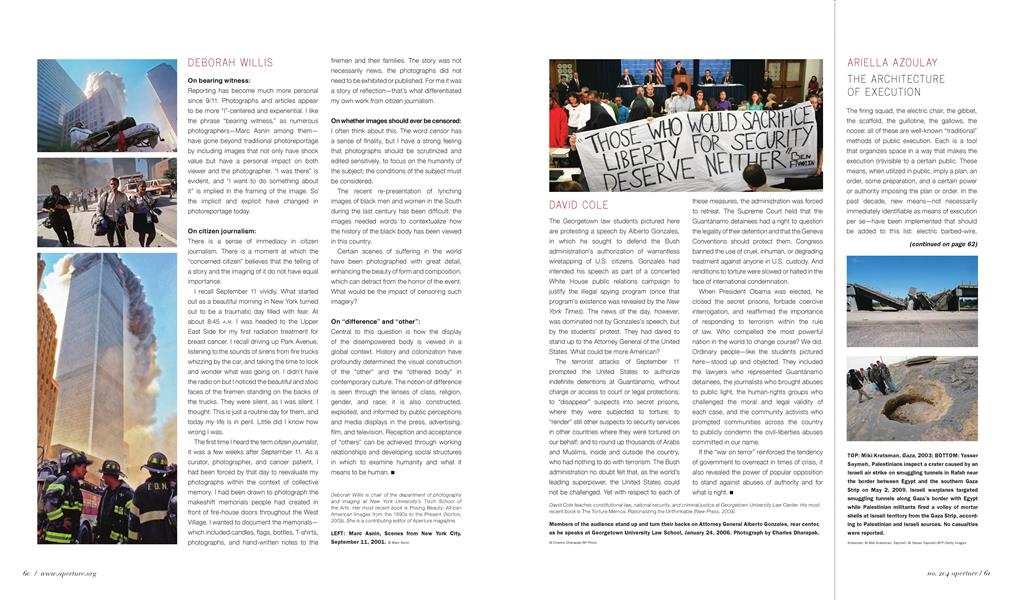
The Georgetown law students pictured here are protesting a speech by Alberto Gonzales, in which he sought to defend the Bush administration’s authorization of warrantless wiretapping of U.S. citizens. Gonzales had intended his speech as part of a concerted White House public relations campaign to justify the illegal spying program (once that program’s existence was revealed by the New York Times). The news of the day, however, was dominated not by Gonzales’s speech, but by the students’ protest. They had dared to stand up to the Attorney General of the United States. What could be more American?
The terrorist attacks of September 11 prompted the United States to authorize indefinite detentions at Guantánamo, without charge or access to court or legal protections; to “disappear” suspects into secret prisons, where they were subjected to torture; to “render” still other suspects to security services in other countries where they were tortured on our behalf; and to round up thousands of Arabs and Muslims, inside and outside the country, who had nothing to do with terrorism. The Bush administration no doubt felt that, as the world’s leading superpower, the United States could not be challenged. Yet with respect to each of these measures, the administration was forced to retreat. The Supreme Court held that the Guantánamo detainees had a right to question the legality of their detention and that the Geneva Conventions should protect them. Congress banned the use of cruel, inhuman, or degrading treatment against anyone in U.S. custody. And renditions to torture were slowed or halted in the face of international condemnation.
When President Obama was elected, he closed the secret prisons, forbade coercive interrogation, and reaffirmed the importance of responding to terrorism within the rule of law. Who compelled the most powerful nation in the world to change course? We did. Ordinary people—like the students pictured here—stood up and objected. They included the lawyers who represented Guantánamo detainees, the journalists who brought abuses to public light, the human-rights groups who challenged the moral and legal validity of each case, and the community activists who prompted communities across the country to publicly condemn the civil-liberties abuses committed in our name.
If the “war on terror” reinforced the tendency of government to overreact in times of crisis, it also revealed the power of popular opposition to stand against abuses of authority and for what is right. ■
David Cole teaches constitutional law, national security, and criminal justice at Georgetown University Law Center. His most recent book is The Torture Memos: Rationalizing the Unthinkable (New Press, 2009).

More From This Issue
-
 Dialogue
Talking Pictures
Fall 2011 -
 Essay
Essay"This Is The Photo League"
Fall 2011 -
 Work And Process
An Atlas Of Decay: Cyprien Gaillard
Fall 2011 -
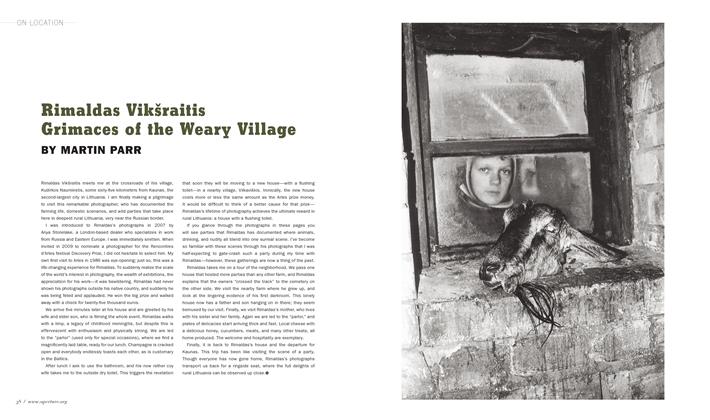 On Location
Rimaldas Vikšraitis: Grimaces Of The Weary Village
Fall 2011 -
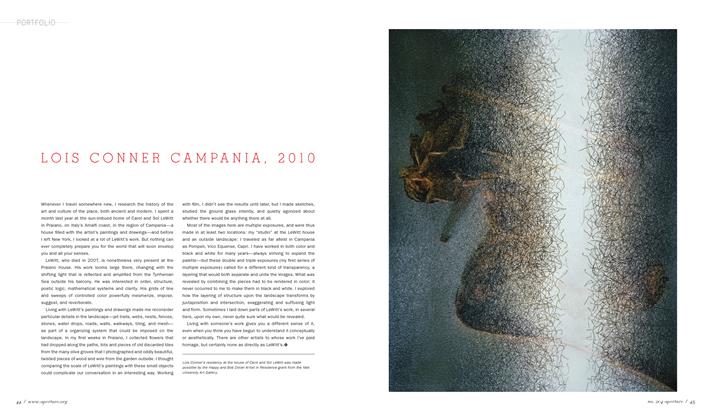 Portfolio
Lois Conner: Campania, 2010
Fall 2011 -
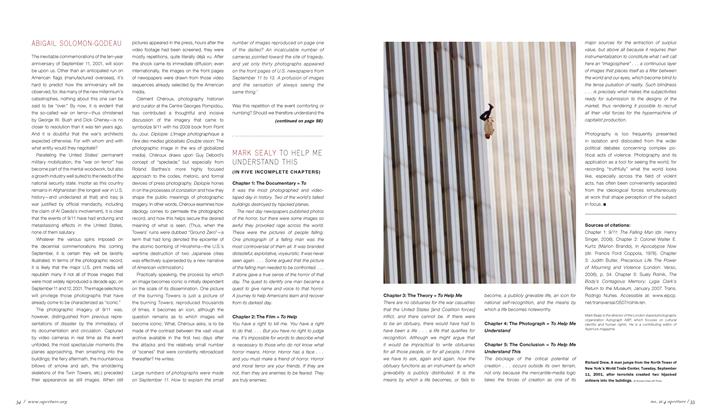 The Anxiety Of Images
Abigail Solomon-Godeau
Fall 2011
David Cole
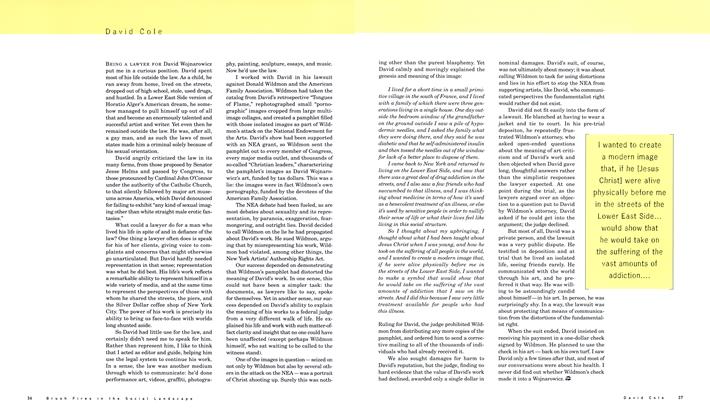
The Anxiety Of Images
-
 The Anxiety Of Images
Allan Sekula
Fall 2011 -
The Anxiety Of Images
Mark Sealy To Help Me Understand This
Fall 2011 -
 The Anxiety Of Images
Anne Wilkes Tucker Releasing Fear
Fall 2011 -
 The Anxiety Of Images
David Levi Strauss
Fall 2011 -
 The Anxiety Of Images
Deborah Willis
Fall 2011 -
The Anxiety Of Images
Tim Hetherington
Fall 2011
