Reviews
American Horizons: The Photographs Of Art Sinsabaugh
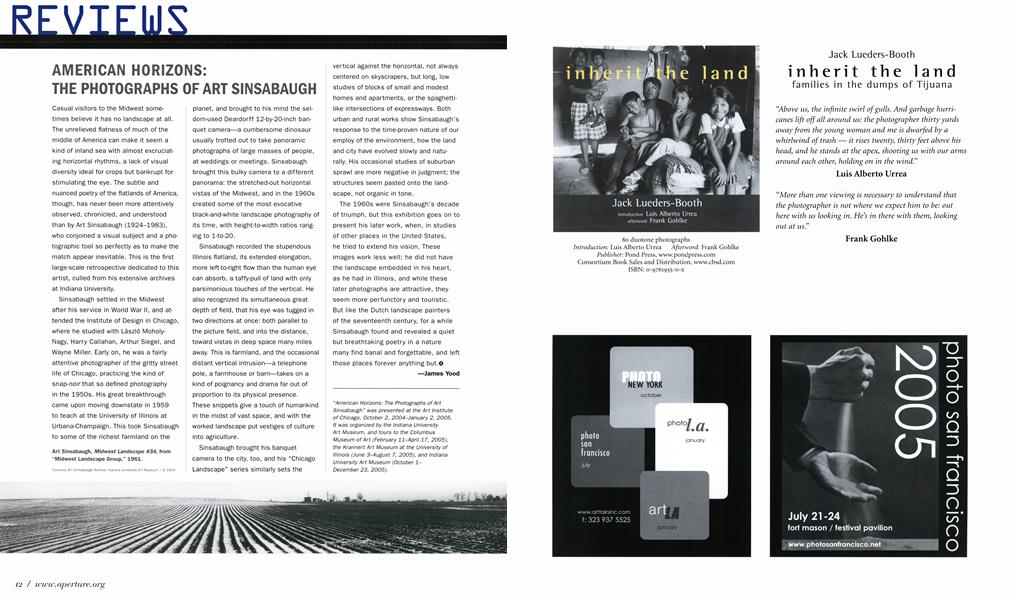
AMERICAN HORIZONS: THE PHOTOGRAPHS OF ART SINSABAUGH
REVIEWS
Casual visitors to the Midwest sometimes believe it has no landscape at all. The unrelieved flatness of much of the middle of America can make it seem a kind of inland sea with almost excruciating horizontal rhythms, a lack of visual diversity ideal for crops but bankrupt for stimulating the eye. The subtle and nuanced poetry of the flatlands of America, though, has never been more attentively observed, chronicled, and understood than by Art Sinsabaugh (1924-1983), who conjoined a visual subject and a photographic tool so perfectly as to make the match appear inevitable. This is the first large-scale retrospective dedicated to this artist, culled from his extensive archives at Indiana University.
Sinsabaugh settled in the Midwest after his service in World War II, and attended the Institute of Design in Chicago, where he studied with László MoholyNagy, Harry Callahan, Arthur Siegel, and Wayne Miller. Early on, he was a fairly attentive photographer of the gritty street life of Chicago, practicing the kind of snap-no/r that so defined photography in the 1950s. His great breakthrough came upon moving downstate in 1959 to teach at the University of Illinois at Urbana-Champaign. This took Sinsabaugh to some of the richest farmland on the
planet, and brought to his mind the seldom-used Deardorff 12-by-20-inch banquet camera—a cumbersome dinosaur usually trotted out to take panoramic photographs of large masses of people, at weddings or meetings. Sinsabaugh brought this bulky camera to a different panorama: the stretched-out horizontal vistas of the Midwest, and in the 1960s created some of the most evocative black-and-white landscape photography of its time, with height-to-width ratios ranging to l-to-20.
Sinsabaugh recorded the stupendous Illinois flatland, its extended elongation, more left-to-right flow than the human eye can absorb, a taffy-pull of land with only parsimonious touches of the vertical. He also recognized its simultaneous great depth of field, that his eye was tugged in two directions at once: both parallel to the picture field, and into the distance, toward vistas in deep space many miles away. This is farmland, and the occasional distant vertical intrusion—a telephone pole, a farmhouse or barn—takes on a kind of poignancy and drama far out of proportion to its physical presence. These snippets give a touch of humankind in the midst of vast space, and with the worked landscape put vestiges of culture into agriculture.
Sinsabaugh brought his banquet camera to the city, too, and his “Chicago Landscape” series similarly sets the
vertical against the horizontal, not always centered on skyscrapers, but long, low studies of blocks of small and modest homes and apartments, or the spaghettilike intersections of expressways. Both urban and rural works show Sinsabaugh’s response to the time-proven nature of our employ of the environment, how the land and city have evolved slowly and naturally. His occasional studies of suburban sprawl are more negative in judgment; the structures seem pasted onto the landscape, not organic in tone.
The 1960s were Sinsabaugh’s decade of triumph, but this exhibition goes on to present his later work, when, in studies of other places in the United States, he tried to extend his vision. These images work less well; he did not have the landscape embedded in his heart, as he had in Illinois, and while these later photographs are attractive, they seem more perfunctory and touristic. But like the Dutch landscape painters of the seventeenth century, for a while Sinsabaugh found and revealed a quiet but breathtaking poetry in a nature many find banal and forgettable, and left those places forever anything but.©
James Yood
“American Horizons: The Photographs of Art Sinsabaugh” was presented at the Art Institute of Chicago, October 2, 2004-January 2, 2005. It was organized by the Indiana University Art Museum, and tours to the Columbus Museum of Art (February 11-April 17, 2005), the Krannert Art Museum at the University of Illinois (June 3-August 7, 2005), and Indiana University Art Museum (October 1December 23, 2005).
More From This Issue
-
 On Assignment
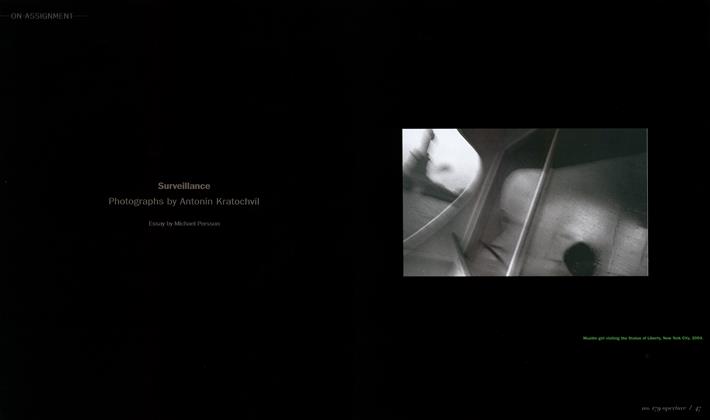
Surveillance
Summer 2005 -
 Archive
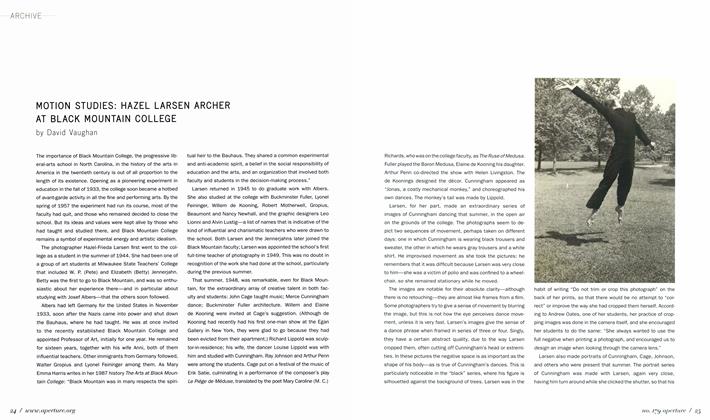
Motion Studies: Hazel Larsen Archer At Black Mountain College
Summer 2005 -
 Dialogue
Unpacking My Library
Summer 2005 -
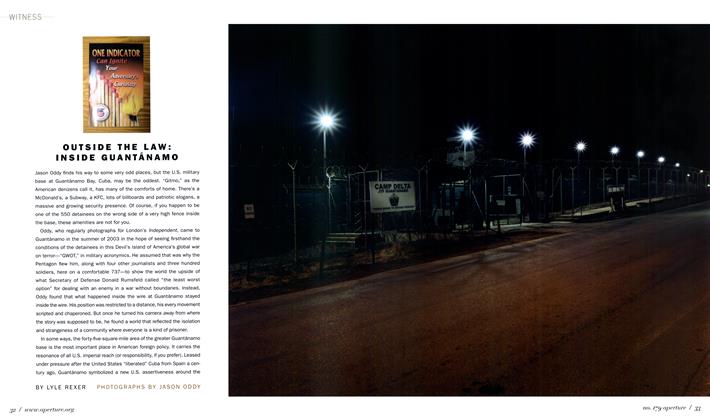 Witness
Outside The Law: Inside Guantánamo
Summer 2005 -
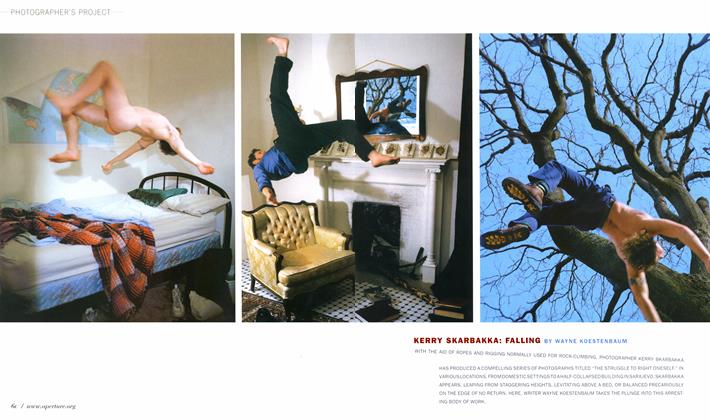 Photographer's Project
Kerry Skarbakka: Falling
Summer 2005 -
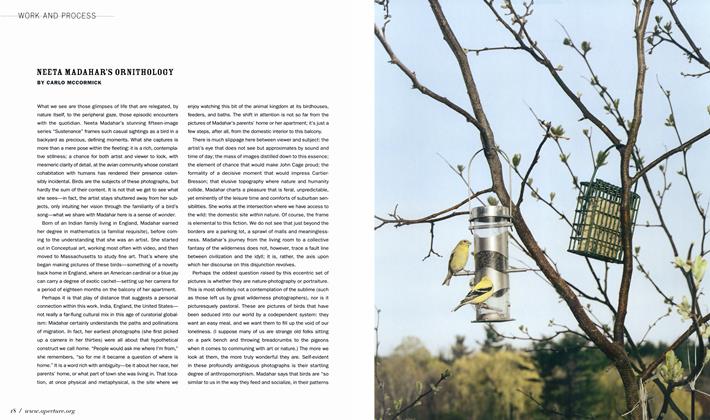 Work And Process
Neeta Madahar's Ornithology
Summer 2005
James Yood
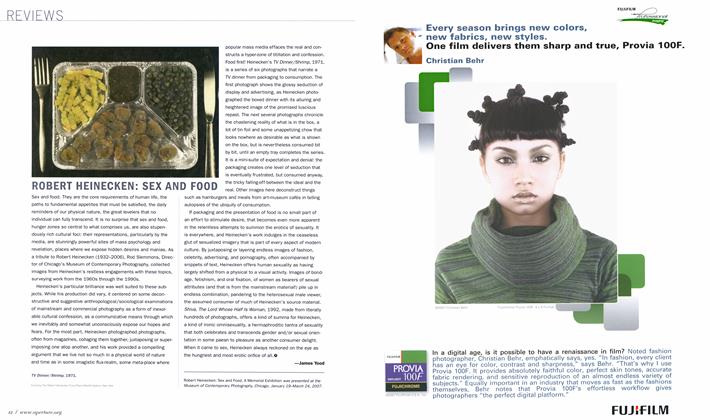
Reviews
-
 Reviews
Inside/outside: Contemporary German Photography
Fall 2009 -
 Reviews
Photography Degree Zero: Reflections On Roland Barthes's Camera Lucida
Spring 2010 -
 Reviews
Christian Boltanski
Winter 2005 -
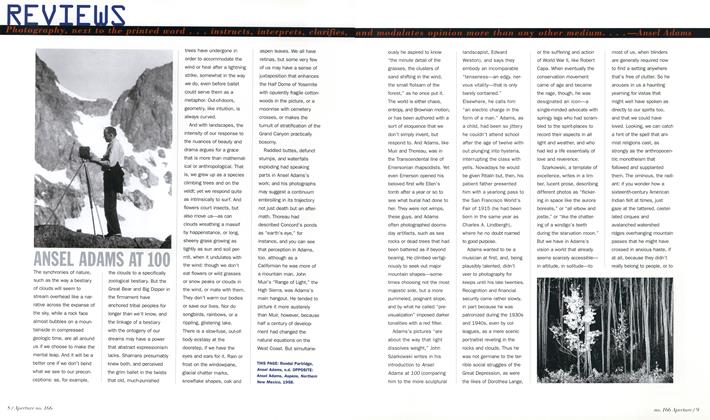 Reviews
Ansel Adams At 100
Spring 2002 -
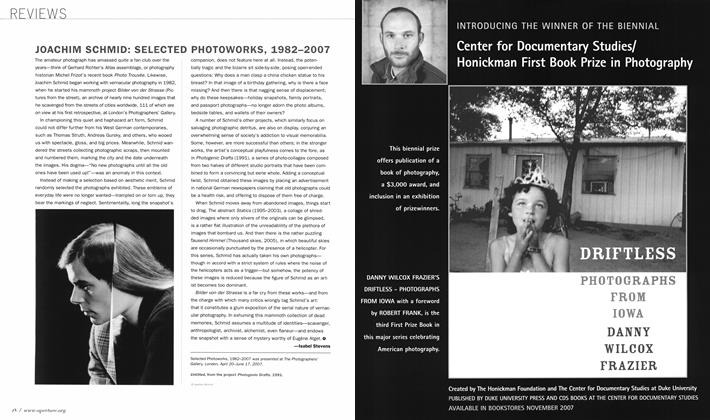 Reviews
Joachim Schmid: Selected Photoworks, 1982-2007
Winter 2007 -
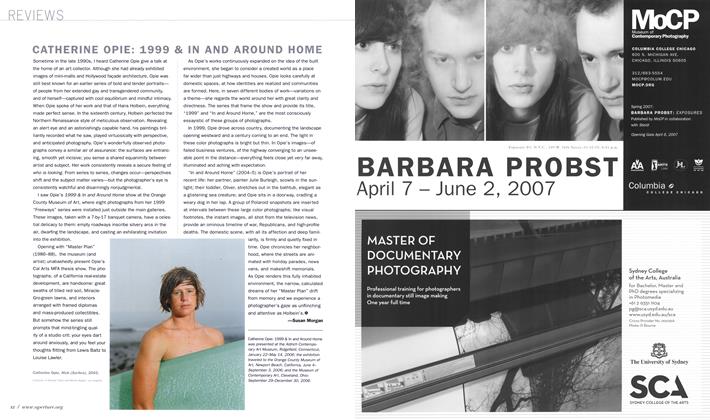 Reviews
Catherine Opie: 1999 & In And Around Home
Spring 2007
